

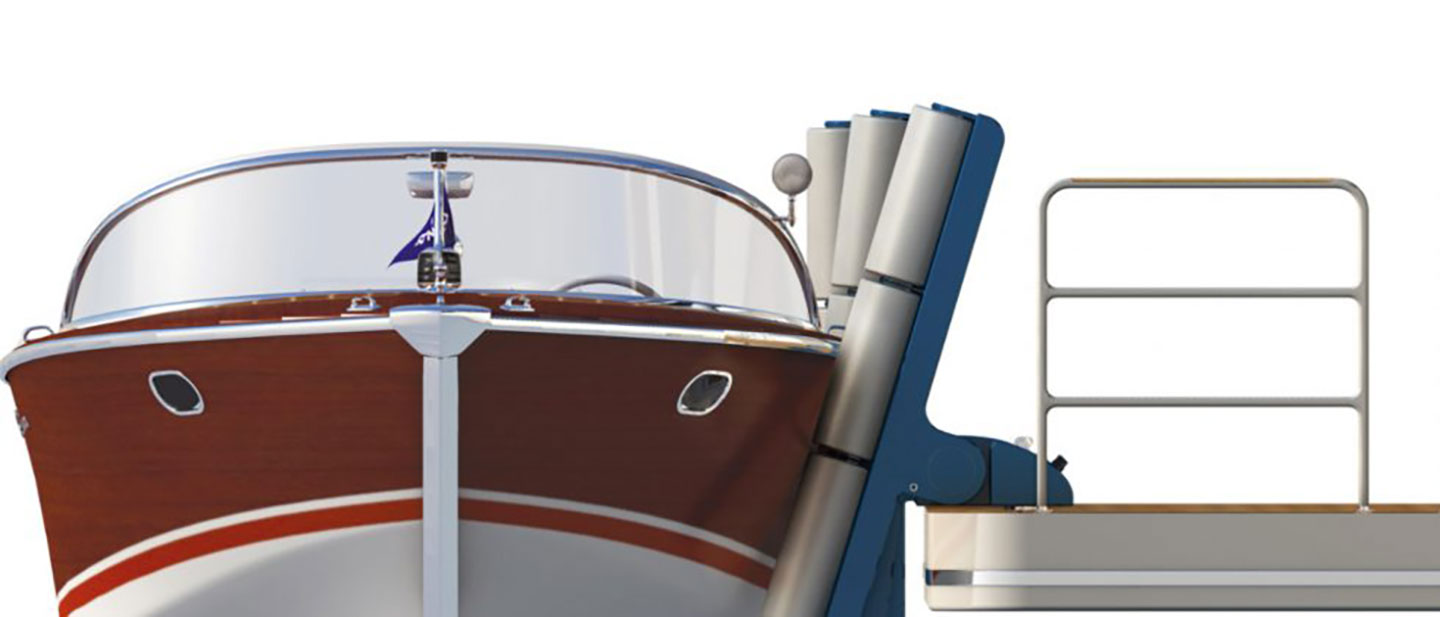

Weight Reduction on Yachts: Why Every Kilogram
How much difference can a few kilograms really make on a yacht?
On their own, very little. But a yacht does not carry just a few kilograms. Every component, fitting, system, and piece of equipment contributes to the vessel’s overall weight. Over time, those individual decisions add up. For designers and engineers, weight is therefore more than a figure on a specification sheet. It can influence how a yacht moves, how efficiently it operates and how the weight carried on board is distributed.
This is why lightweight yacht construction has become such an important consideration in modern yacht design. The objective is not simply to make everything lighter. It is to make sure every kilogram has a purpose.
Why Weight Matters on a Yacht
A yacht’s performance is influenced by many factors, from hull design and propulsion to sea conditions and operating speed. Displacement is another important part of the equation. The more weight a vessel carries, the more work is required to move it through the water. Reducing unnecessary weight can therefore contribute to improved responsiveness and efficiency, although the exact effect will vary depending on the vessel and its overall design.
For a designer, this makes weight something to consider throughout the project rather than at the end. A lighter component may not transform a yacht on its own. But when weight is considered across the vessel, the cumulative effect becomes much more meaningful. This is where yacht weight reduction becomes less about one dramatic change and more about achieving incremental weight savings throughout the design process.
A Racing Lesson That Still Applies
For multiplex, the connection between weight and performance began long before carbon fibre became established in the superyacht sector.
Founder Jan Reiners trained as a boat builder before becoming involved in competitive sailing. He was part of the crew that won the Admiral’s Cup in 1983, before winning the ¾ – tonne Cup in 1984, and the Admiral’s Cup again in 1985 aboard Outsider. Racing provided a practical education in the importance of weight. Every component had to justify its place onboard, and the search for performance encouraged new approaches to materials and construction.
Jan Reiners began experimenting with carbon fibre during this period, including developing a carbon fibre rubber blade for Outsider. That early experience helped establish the foundation for multiplex’s later work in lightweight composite engineering.
The yachts have changed considerably since then. The principle remains the same. When performance matters, unnecessary weight is difficult to justify.

It’s Not Just About Total Weight
Another consideration is just as important as the total figure: where the weight is located.
Weight distribution can influence the way a yacht behaves because weight positioned in different areas of the vessel can have different effects on stability and handling. This makes the location of equipment as relevant as its individual weight.
For example, reducing unnecessary mass higher up in a vessel can form part of a broader approach to managing the yacht’s centre of gravity. Likewise, the placement of equipment needs to be considered alongside the wider structure and systems.
This is why good weight management is rarely about simply asking whether something can be made lighter. The better question is whether the material and construction are appropriate for what the component needs to achieve, and where it sits within the vessel.
Where Equipment Can Make a Difference
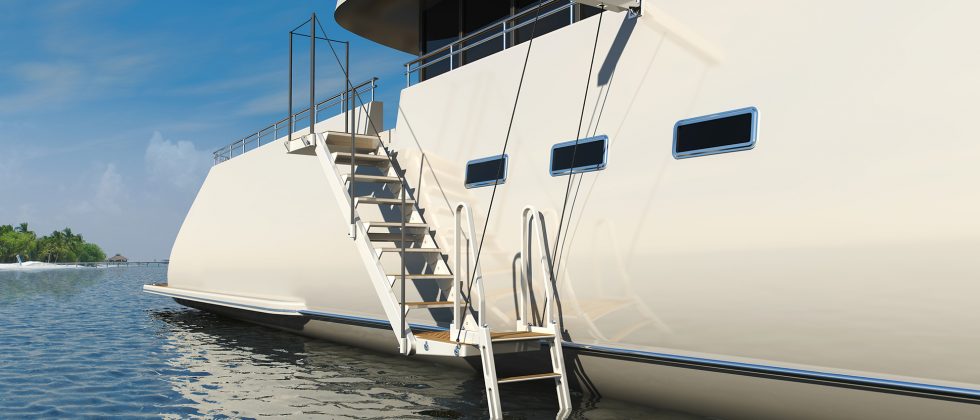
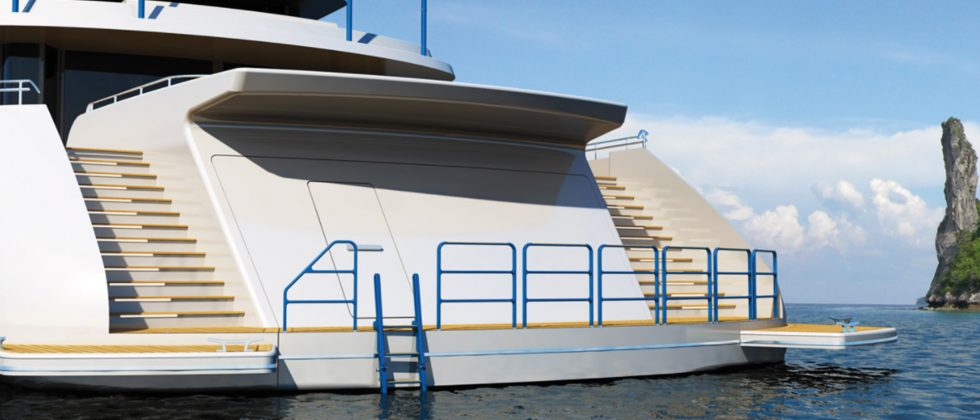
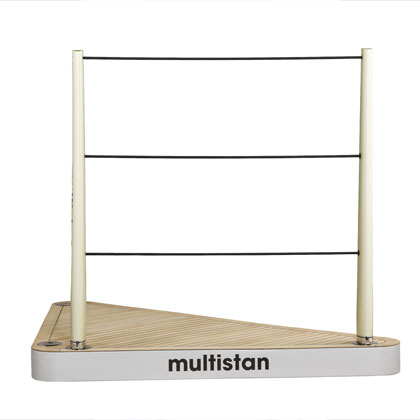
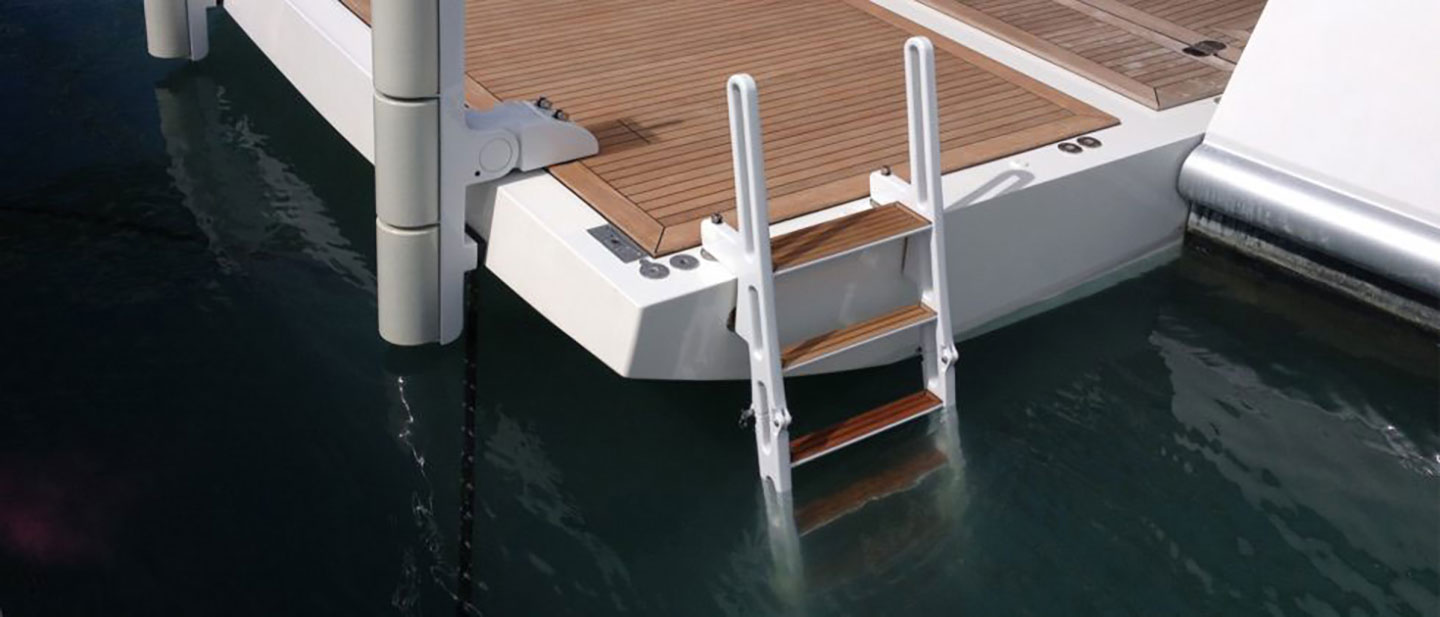
Large structural decisions naturally receive considerable attention when a yacht’s weight is being assessed. But equipment contributes too. Boarding systems, ladders, railings, stairs, and other exterior components all need to be carried, installed, and, in some cases, moved or stored during normal operations.
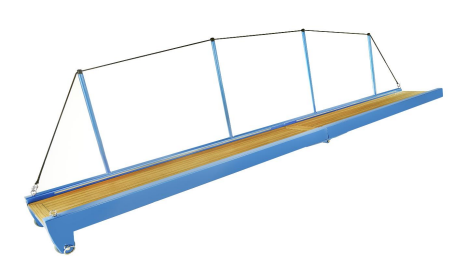
Choosing lightweight yacht equipment can therefore have benefits beyond the vessel’s performance. Consider a gangway. It may need to be deployed and removed regularly, sometimes by a small crew. A lighter design can make that process more manageable without compromising the function of the equipment.
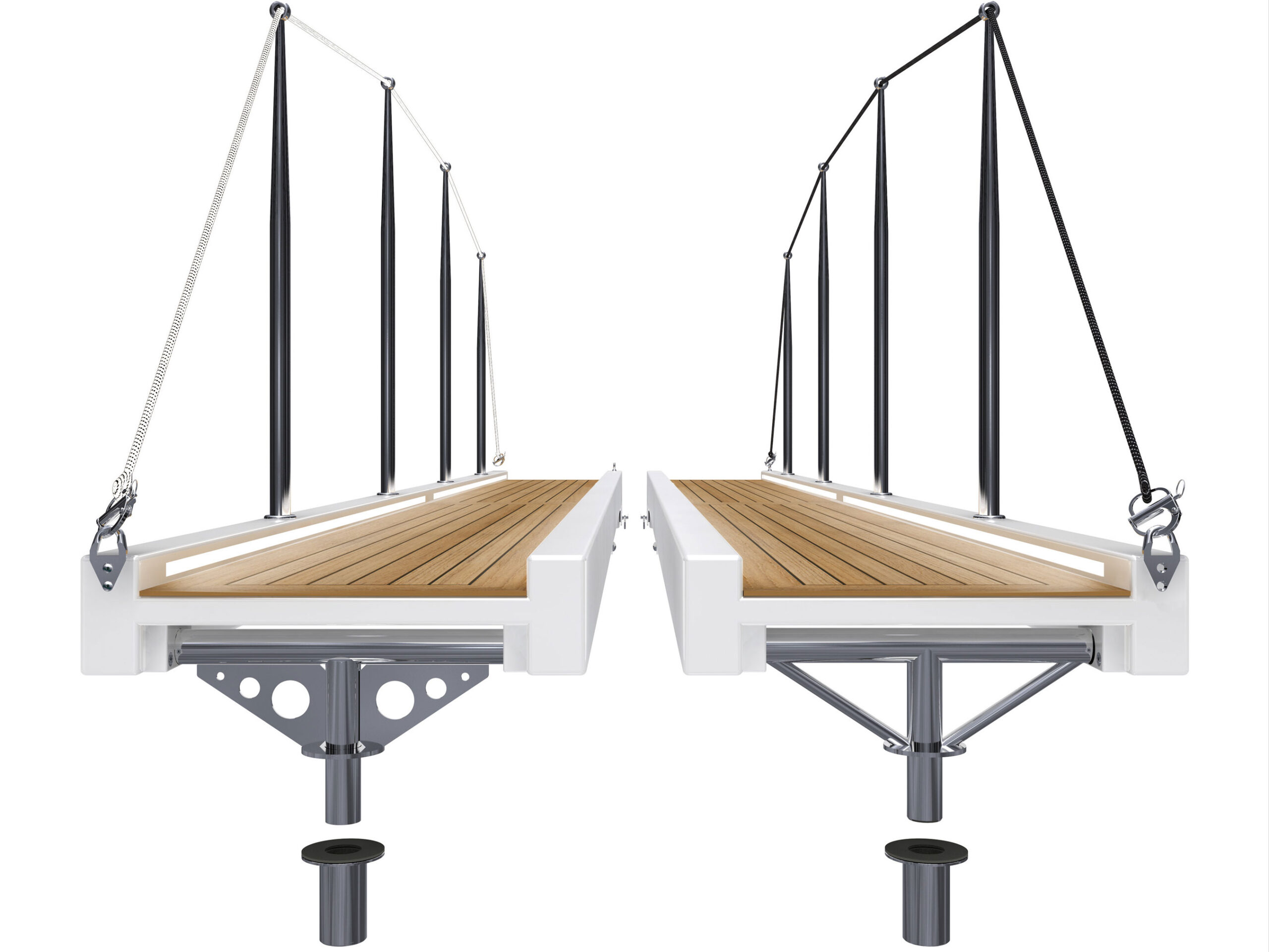
multiplex’s multiflap is designed with this practical requirement in mind. Its carbon fibre construction gives the gangway a low weight, while its folding design also helps reduce the space required for storage.
This is an important distinction. Weight reduction should not exist simply to produce a lower number. It should make the yacht work better.
From Weight Saving to Better Efficiency
Weight can also form part of the conversation around yacht fuel efficiency.
Fuel consumption is influenced by a wide range of factors, including hull form, propulsion, speed, weather, and sea conditions. It would therefore be misleading to suggest that removing a set amount of weight automatically produces a specific fuel saving. However, reducing unnecessary displacement can contribute to the wider goal of operating a yacht efficiently.
For a new build, this can be considered from the earliest stages of design. Materials, equipment, and systems can be assessed together so that weight is managed across the vessel rather than added retrospectively.
On an existing yacht, replacing heavy equipment with lighter alternatives can be another way to reduce weight, where a suitable replacement is available.
The important point is to look at the yacht as a complete system.
Why Material Choice Matters
Carbon fibre has a particular role to play because it gives designers another way to balance structural requirements with weight.
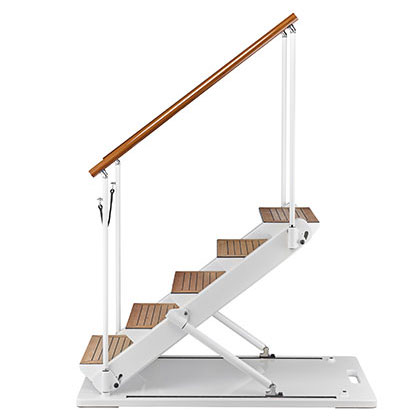
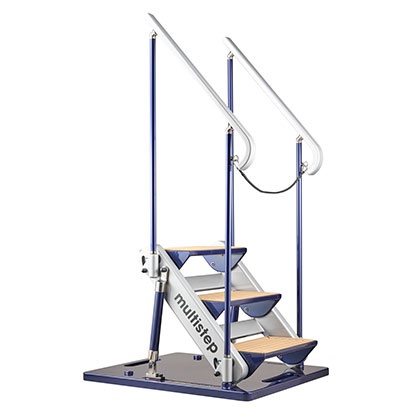
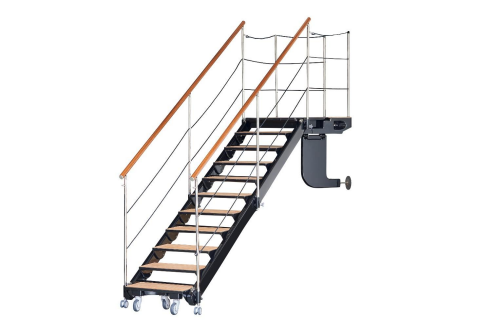
multiplex has developed its experience with the material over decades, applying the principles first explored in racing to yacht equipment. The multiflap, for example, uses a carbon fibre base and combines low weight with the load capacity required for a working gangway. The multistair uses a carbon fibre structure alongside stainless steel and teak-covered steps, allowing the design to be adapted to different yacht requirements.
This is where carbon fibre yacht construction becomes particularly interesting. The material is not valuable simply because it is light. Its value comes from what engineers can achieve with that weight.
Lightweight Should Still Feel Solid
There is an important difference between making something light and making something lightweight through good engineering. Yacht equipment still needs to feel dependable. A railing needs to provide support. A ladder needs to remain stable. A gangway needs to handle its intended loads. A stair system needs to withstand regular use.
The engineering challenge is to achieve those requirements without adding material that does not contribute to the finished product.
That balance is central to multiplex’s approach. The aim is not to remove weight at any cost. It is to use materials intelligently so that the finished equipment provides the necessary performance without unnecessary mass.
Looking At The Yacht As A Whole
The most effective yacht performance optimisation rarely comes from a single component. It comes from understanding how hundreds of individual decisions interact. A lighter piece of equipment can contribute to lower overall weight. Better weight distribution can influence how that weight affects the vessel. More efficient systems can reduce operational demands. Thoughtful material selection can allow designers to achieve the required performance without unnecessary mass.
None of these decisions exists in isolation. Together, they form a more considered approach to yacht design.
Every Kilogram Has A Purpose
Modern yachts continue to become more sophisticated. They carry increasingly complex systems and equipment while owners and designers expect high levels of performance, efficiency, and comfort. That makes intelligent weight management more relevant, not less.
For multiplex, the philosophy has its roots in competitive sailing in Jan Reiners’ early experience with carbon fibre. The same principles now inform the development of equipment for modern superyachts.
The goal is not simply to build lighter. It is to understand where weight matters, where it can be reduced, and where it needs to remain, because the best yacht performance optimisation is not about removing weight for the sake of it.
It is about making every kilogram count.