

How to Choose the Right Gangway for Your Superyacht
For superyacht owners and captains, the gangway is more than a boarding structure; It carries guests, crew, provisions, and tenders. It must look impeccable in a Côte d’Azur marina and perform flawlessly at anchor off a Bahamian sandbar.
If the gangway is chosen as an afterthought or selected for price or dimensions alone, the result is a system that underperforms, clashes with the yacht’s design language, or fails to meet safety requirements in demanding conditions.
This guide provides a comprehensive overview of the key variables to consider, including system type, load rating, design integration, and regulatory compliance, enabling you to make a well-informed and lasting decision.
The Benefits of a High Quality Gangway
The first and most consequential decision is the gangway system type. Each has a distinct set of strengths, and the right choice is determined by your vessel’s size, operational profile, and where you spend most of your time.
Fixed Gangways
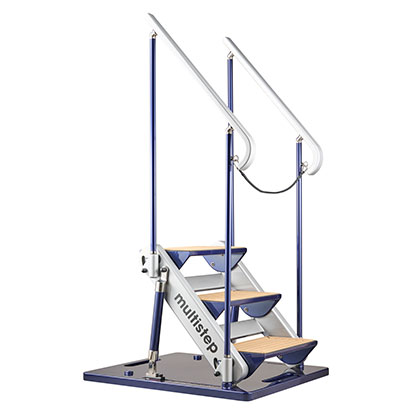
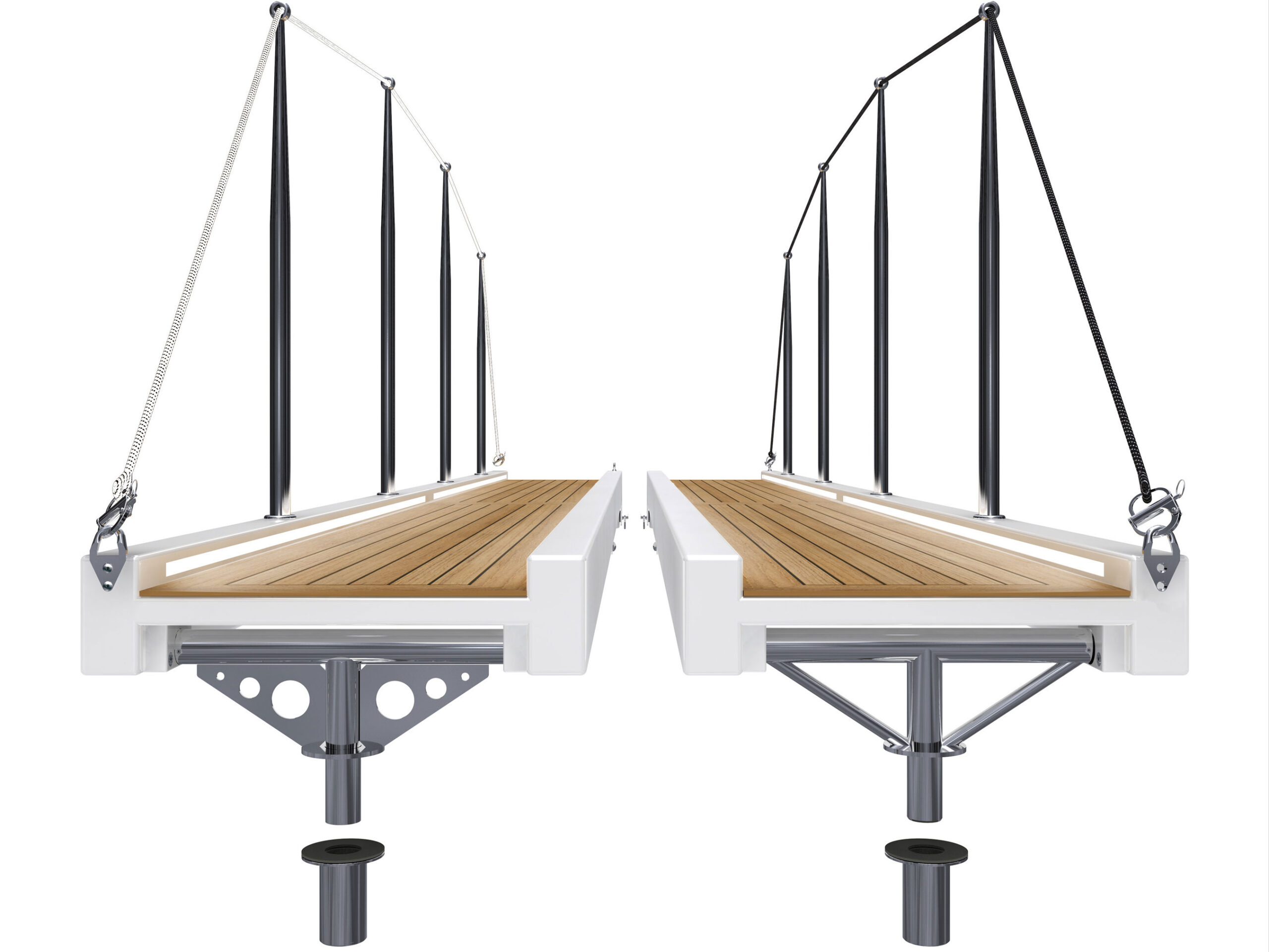
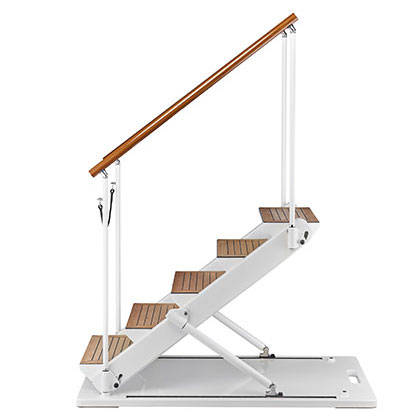
Fixed systems offer a robust and highly reliable solution and remain widely used on charter and commercial vessels where long-term durability, straightforward operation, and cost efficiency are key priorities. Their simple design means low maintenance requirements and dependable performance in demanding conditions.
Length and Load Requirements
Sizing your gangway correctly is not simply a matter of measuring the distance from your transom to the dock. Multiple variables interact to determine the length you need and the structural specification required.
Determining the Right Length
As a working rule, the gangway should be able to span the widest expected gap between vessel and quayside, accounting for tidal variation and the distance imposed by fender systems. For most superyachts, this means:
- Yachts 25–35m: gangways of 6–10 metres are typically sufficient
- Yachts 35–50m: 10–14 metres is the practical range
- Yachts above 50m: custom-engineered lengths often exceed 14 metres
Understanding Load Ratings
Load requirements are set by how the gangway will be used, not just by vessel size. A superyacht receiving daily provisions, water toys, and high guest volumes needs a substantially higher load rating than one used solely for crew boarding.
- Passenger-rated gangways typically carry 500 kg/m² distributed load
- Heavy-duty systems for tender deployment or freight can reach 750 kg/m² or more
- Dynamic loading from wave action must be factored in for anchorage use
- Always specify for your worst-case scenario, not your average use case
Multiplex can help ensure the gangway is correctly specified for real operational demands by assessing usage patterns, peak loading conditions, and dynamic forces, so the selected system is safely rated for worst-case scenarios rather than average use.
Marina Use vs Anchorage Use
Where your yacht spends its time has a direct bearing on the type of gangway system and the features you should prioritise. Marina and anchorage environments place very different demands on the same structure.
Marina Environments
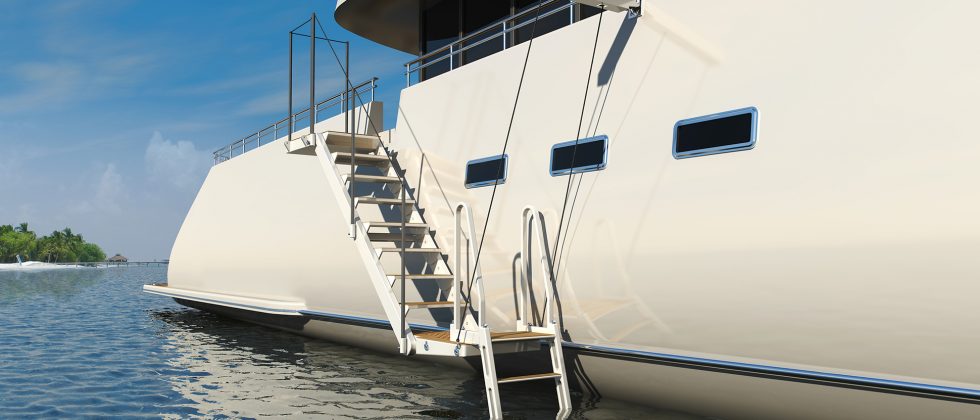
In a marina, the gangway bridges a fixed or semi-fixed distance between the transom and a stationary pontoon or quay. The primary challenges are tidal variation and berth geometry , some Mediterranean ports have very limited lateral clearance, and the gangway must not affect neighbouring vessels.
- Adjustable handrails and non-slip surfaces are essential for guest and crew movements day and night.
- LED lighting along the gangway is increasingly expected as standard on premium vessels
- Handrail height and balustrade specification must meet the marina’s own regulations in addition to ISO requirements
Multiplex GmbH designs marina-optimised gangways with precise hydraulic control and compact stowage solutions, allowing safe deployment even in tight Mediterranean berths. Their integrated LED systems, customisable finishes, and compliance-driven engineering ensure seamless alignment with marina regulations while enhancing both safety and onboard aesthetics.
Anchorage Use
At anchor, the gangway is typically deployed from the transom to a swim platform or directly to a tender. The vessel moves with wind and current, meaning the gangway must articulate, its connection points must allow movement in multiple axes without binding or creating structural stress.
- Ball-joint or gimballed connections are essential for anchorage deployment
- Anti-roll handrail grips and wider tread widths improve safety in a swell
- Consider a dedicated passerelle for tender boarding , a slimmer, lighter system than the main gangway
- Gangways deployed at anchor must not create a noise or vibration nuisance at night
Multiplex GmbH specialises in advanced articulation systems, including multi-axis joints and precision-engineered hydraulics, ensuring smooth, silent operation even in dynamic anchorage conditions. Their lightweight passerelle solutions are optimised for tender boarding, improving crew handling while maintaining exceptional stability and passenger safety.
Design Integration: The Gangway as Part of Your Yacht
On a superyacht, there is no such thing as a functional component that exists outside the design brief. The gangway is visible from the quayside, from neighbouring vessels, and in every photograph taken of the boat at berth. It must be designed accordingly.
Material and Finish
Most high-specification gangways today are built in marine-grade aluminium alloy, which offers the best strength-to-weight ratio for this application. Carbon fibre is used on the most weight-conscious builds, particularly sailing yachts, but comes at a significant cost premium.
- Anodised aluminium in custom RAL colours can be matched to the vessel’s hull and superstructure
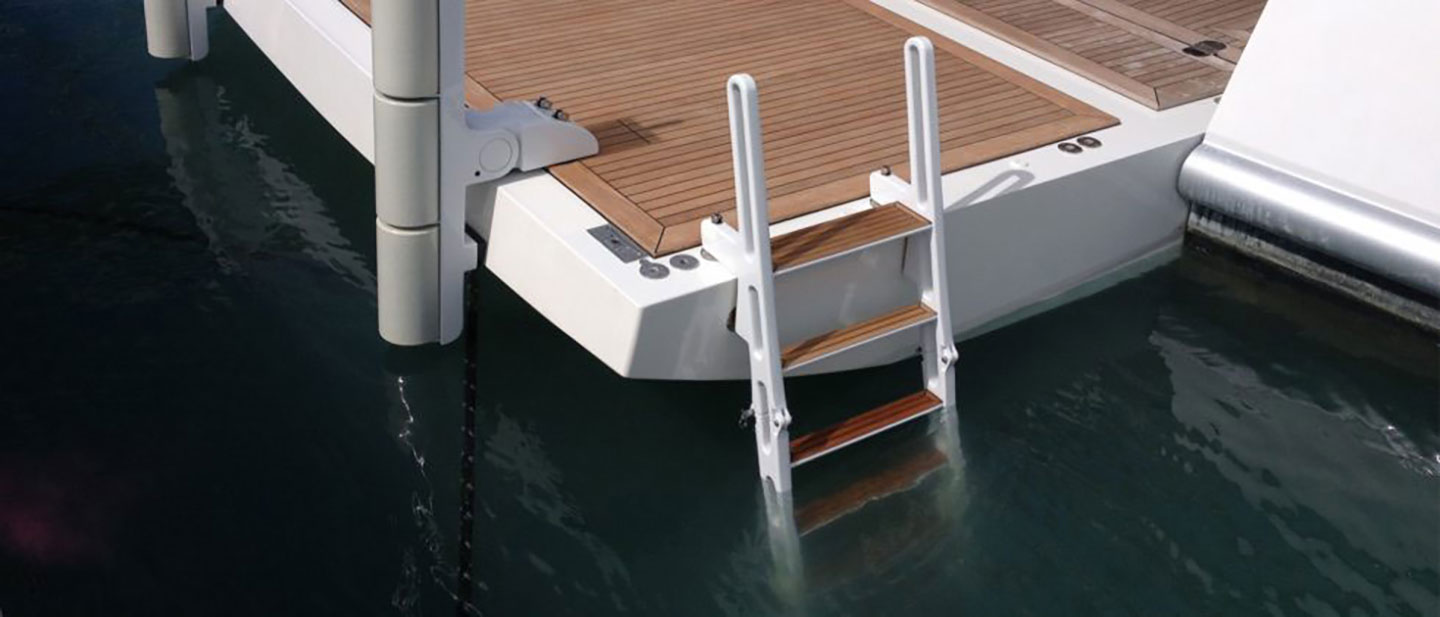
- Teak or composite decking is available and should be specified to match the transom platform
- Handrail profiles and balustrade design should be drawn from the yacht’s interior design language; tubular stainless, profile aluminium, or tensioned wire all carry different aesthetic signals
Multiplex GmbH offers fully bespoke material and finish options, including precision anodising, custom colour matching, and high-end decking integration. Their engineering approach ensures that aesthetic choices do not compromise structural performance, allowing designers to achieve a cohesive visual identity across the yacht.
Integration with the Transom and Deck
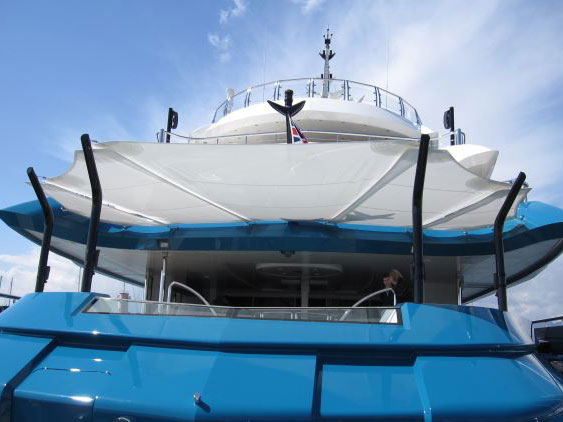
A well-integrated gangway should feel like a natural extension of the yacht’s architecture, not an addition made after the fact. Achieving this requires close collaboration between the naval architect, deck engineer, and gangway manufacturer from the earliest design stages.
Key considerations include:
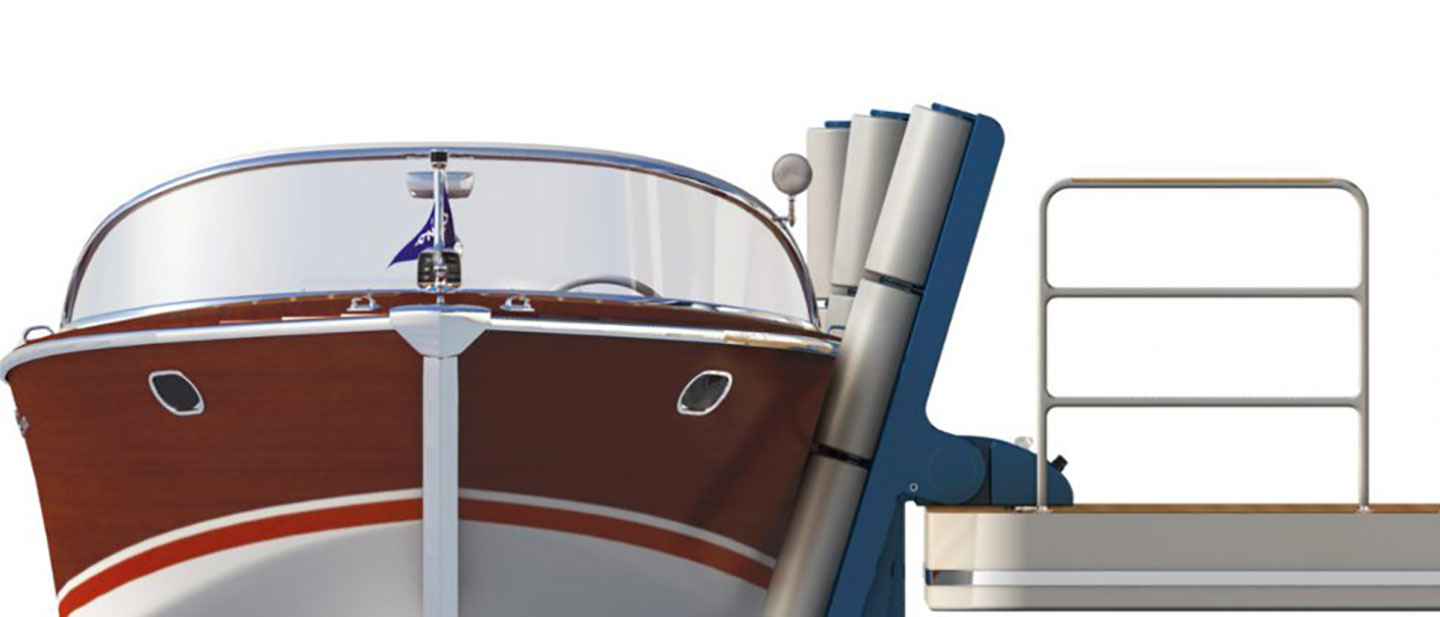
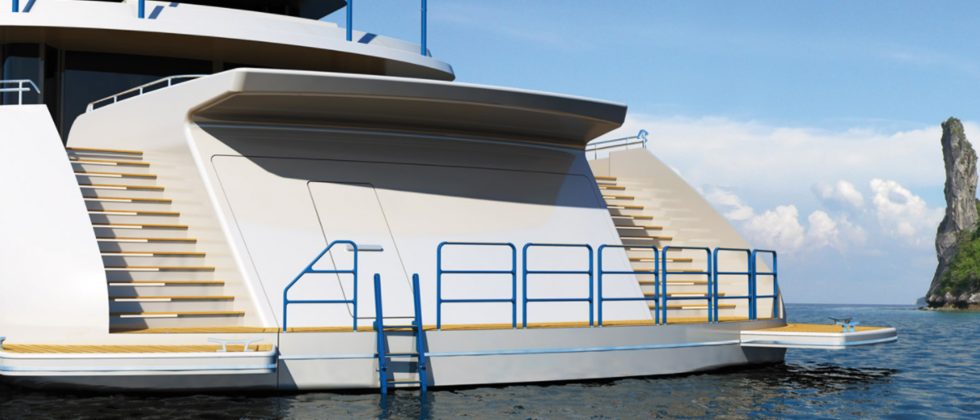
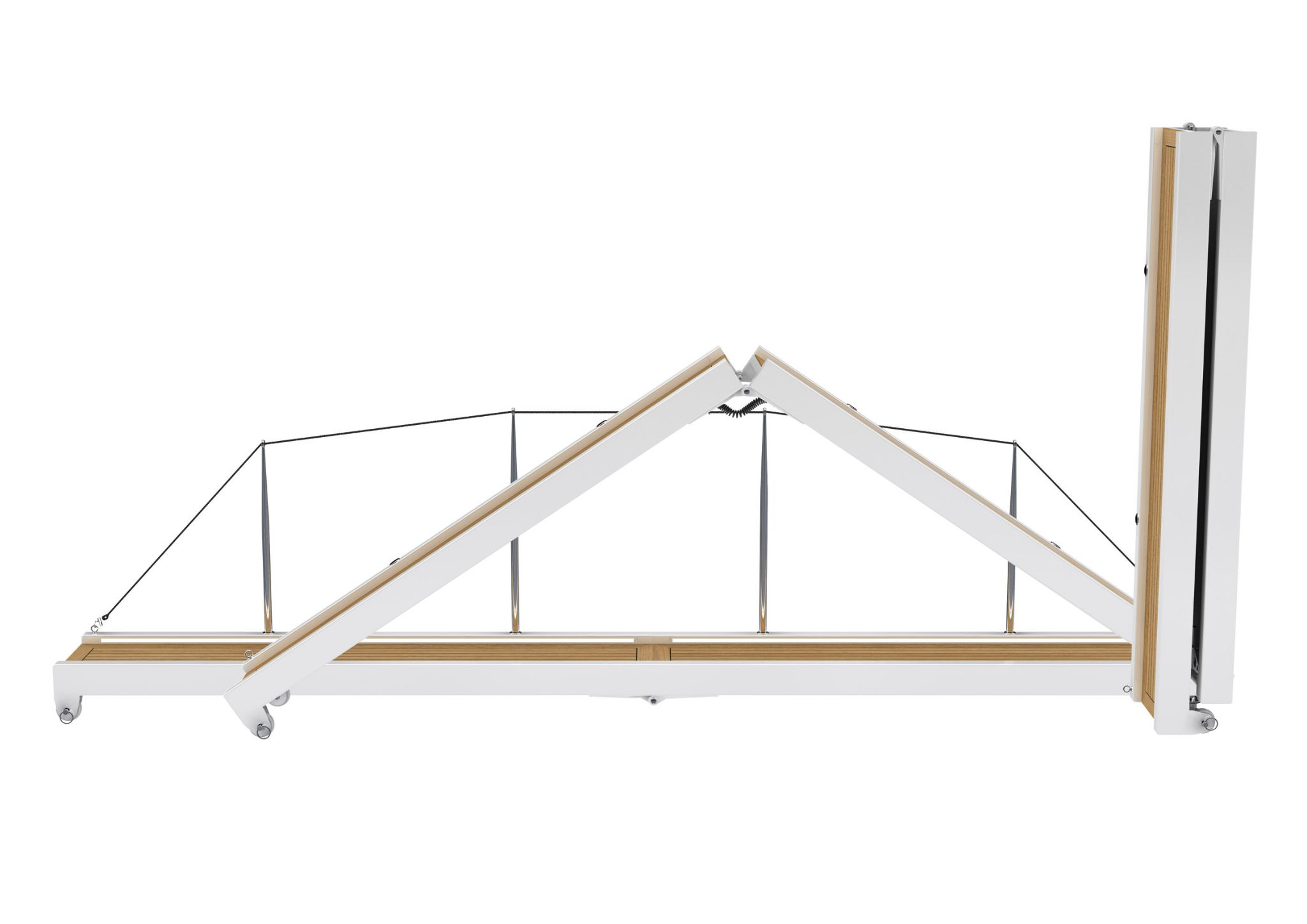
- Recessed storage solutions that conceal the gangway cleanly when not in use
- Hydraulic routing designed to preserve valuable tank and technical space
- Intuitive control positioning that enables efficient single-crew operation
Multiplex GmbH works closely with shipyards and naval architects to develop fully integrated boarding solutions with concealed storage concepts, optimised system layouts, and user-friendly operation. The result is a cleaner installation, improved functionality, and a more refined onboard experience.
Custom Yacht Passerelles
Today’s passerelle is no longer viewed solely as a practical boarding solution. On modern superyachts, it has become an integral design feature that reflects the yacht’s overall aesthetic language.
High-end projects increasingly specify bespoke details such as:
- Integrated LED illumination
- Custom handrail configurations
- Teak finishes matched precisely to the yacht’s deck surfaces
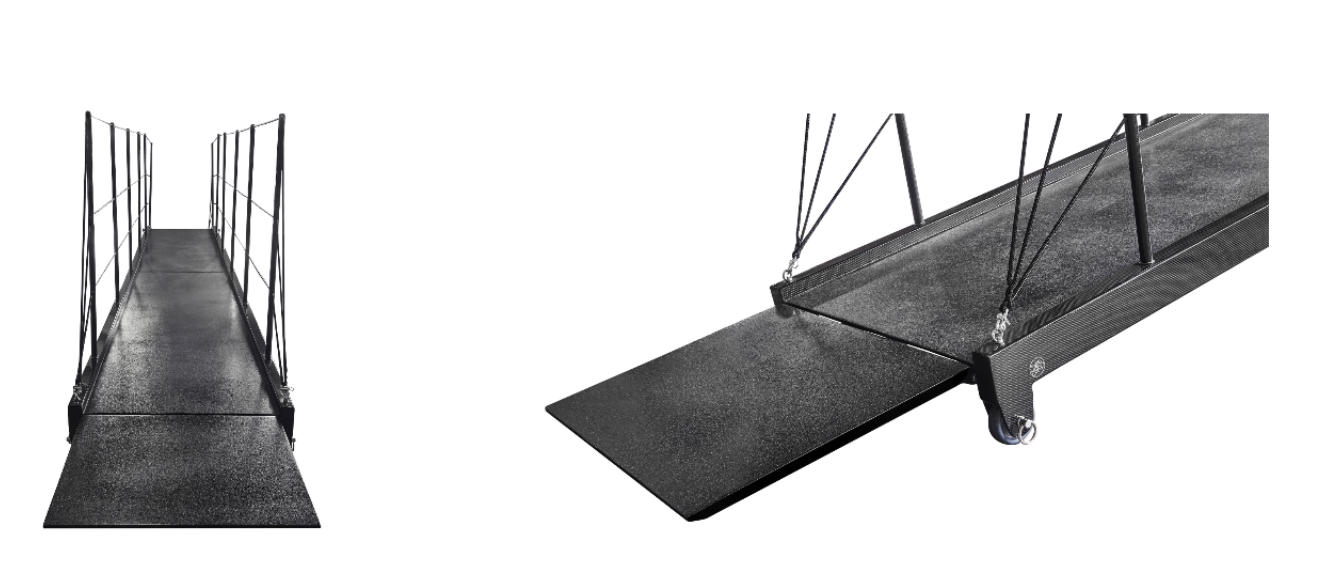
- Lightweight carbon fibre construction for easier handling and reduced weight
Multiplex GmbH produces custom carbon fibre passerelles that combine structural performance with elegant detailing.
Safety Standards and Certification
No gangway specification should be considered without a clear understanding of the applicable regulatory framework. Whether operating privately or commercially, compliance is an essential component of superyacht safety and engineering integrity.
Applicable Standards
- ISO 5489
Defines design, construction, and load requirements for yacht gangways - MCA Large Yacht Code (LY3)
Applies to commercially operated yachts over 24m LOA in UK and international water - RINA and Bureau Veritas Classification Rules
May introduce additional structural and operational requirements depending on vessel classification - EU Recreational Craft Directive (RCD)
Applies to CE-marked vessels below 24m
Safety Features That Should Never Be Compromised
Every boarding system should be engineered with safety as a primary consideration, never an optional enhancement.
Critical features include:
- Certified non-slip walking surfaces tested to recognised marine standards
- Handrails with appropriate height and stability in all deployed positions
- Structural load protection systems to prevent overload-related failure
- Secure boarding interfaces at both yacht and quayside connection points
- Dedicated crew safety provisions for operations at anchor
- Full compliance documentation and load certification upon commissioning
Multiplex GmbH integrates advanced safety engineering into every system, combining lightweight carbon fibre construction with rigorously tested structural components, certified surfaces, and precision manufacturing in line with Lloyd’s Register guidelines.
Making the Right Decision
The right gangway is not necessarily the most complex system, nor the simplest option available. It is the solution that aligns precisely with the yacht’s operational profile, aesthetic direction, and technical requirements.
The ideal system should balance:
- Structural integrity
- Ease of handling
- Safe boarding in varying conditions
- Seamless design integration
- Regulatory compliance
- Long-term reliability
Choosing an experienced manufacturer is equally important. The right partner will contribute not only product expertise, but also engineering support, load calculations, compliance guidance, and close collaboration with the yacht’s designer and naval architect throughout the specification process.
Multiplex GmbH delivers custom-engineered boarding solutions developed specifically for the superyacht sector, combining lightweight carbon fibre technology, refined craftsmanship, and practical functionality without compromise.